vincent gambini
  • Home
  • Gambini
  • SHOWS
  • Blog
  • TEACHING
  • BOOKSHOP
  • Contact

Arts Council England funds the 2016 Gambini tour!

24/4/2016

2 Comments

 
I am over the moon to announce that ACE are funding the 2016 tour of 'This is not a magic show', to several UK theatres, including dates in London, Bristol, Margate, Norwich, Cambridge, Ipswich, Exeter and Manchester.
My producer Sally Rose and myself are extremely pleased about the grant, which will allow us to dedicate the required time and effort to move this show on the road, and hopefully book more performances for late 2016 and into 2017.|
I am also happy that a show that supposedly trades on a "low" popular form of entertainment (or so the cliches about magic tell us) can be recognised as artistically vital, and stand its ground within the UK's larger theatre ecology, of which I have been a part for over a decade now (albeit working as Augusto Corrieri, not Vincent Gambini).
Here's to a good few months of 'This is not a magic show', I hope to see you there soon.
Yours
VG
2 Comments

Magic and academia

27/3/2016

0 Comments


I find it both wonderful, and somewhat puzzling, to see a number of new books about magic, written by academics (who are largely non magicians). They are all studies of what we might call the 'cultural meanings' surrounding magic.
I have no idea why this academic interest is developing now... Here are some of the recent-ish academic books on magic I have spotted:

- James W. Cook, The Arts of Deception: Playing with Fraud in The Age of Barnum (2001)
- Simon During, Modern Enchantments: The Cultural Power of Secular Magic (2004)
- Philipp Butterworth, Magic on the Early English Stage (2005)
- Michael Mangan, Performing Dark Arts: A Cultural History of Conjuring (2007)
- Coppa, Hass & Peck eds, Performing Magic on The Western Stage: From The Eighteenth Century to The Present (2008)

Particularly on the relation between magic and cinema:
- Beckman, Karen, Vanishing Women: Magic, Film and Feminism (2003)
- Matthew Solomon, Disappearing Tricks: Silent Film, Houdini, and the New Magic of the Twentieth Century (2010).
- Colin Williamson, Hidden In Plain Sight: An Archeology of Magic and the Cinema (2015)

Add to this list the University of Huddersfield's Journal of Performance Magic, and there's already a sizeable bibliography to be getting to grips with.

What is it about magic that is attracting the interest of university professors, and therefore students, of theatre, film, popular and visual culture? A mystery. But a lot to read up on.


0 Comments

live or televised...

5/3/2016

0 Comments

 
After seeing a live magic show, audience members tend to say something along the lines of:

“It’s not like TV magic, this is happening right in front of me!”

Or:

“On TV and the Internet they could be using CGI special effects, or editing. But here I’m watching it happen with my own eyes!”

Magic, it seems, has to be seen live to be fully appreciated. Down with TVs, screens and recorded images; long live theatre, horray for the live event.
So far so good.

What’s left out of this argument is that by seeing magic live – by seeing a coin melt through a table, for example – in effect reality itself becomes a CGI trick. In a magic show matter itself is shown to be a kind of computer-generated simulation; time and space are effectively code-written, and the magician’s job is to remind us of this code-writing, by imputing an alternative line of code.

So in a live magic show the supposed ‘liveness’ of theatre is shown to be illusory. Through the act, it is as though the magician were reminding us:

'Watch closely. For what is happening now, in fact, is not happening now…’
 

0 Comments

Take me back to reality

13/2/2016

0 Comments

 
Picture
You call this writing?
This dialogue is shit!


That's John Turturro, playing a fictional Hollywood star who loses the plot on a movie set, in Nanni Moretti's brilliant film My Mother (2015). It's another of those small moments that I connect to magic, to theatre, and what it's all about.
In the middle of the film, amid the stresses of production and with Turturro's character forgetting his Italian lines, he finally has an outburst and fights with the film's director. In a section that speaks volumes about illusion, about a desire for authenticity, about wanting to break the fakery, Turturro, pacing up and down the set of a cafeteria, exclaims:

This is the last film I’m making, I retire!
Shit job...
Acting is a waste of time and a waste of a life!
I want out of here man...
I want to go back…
[he picks up a food tray and hurls it on the floor]... back to reality!
Take me back to reality...


0 Comments

You will never make it, but fake it anyway

31/1/2016

0 Comments

 
It is often the films that don't reference magic that are the best at encouraging reflections on it.

I recently saw Harold and Maude (1971) for the first time. It is the combination of humour – at times dry, other times slapstick or even ‘camp’ (in the sense of exaggerated) – and a tragic undertone that works beautifully. A true gem of a movie, at once light and satisfyingly complex.
Particularly dark and funny are the repeated attempts by the 17-year-old protagonist – a lone son to an aristocratic socialite widowed woman – to commit violent suicides. As we learn early on (no great spoiler), these suicides are all carefully staged for the benefit of his mother, who is so used to his daily performances she no longer deigns to pause to acknowledge them. And so we see her chatting away on the phone whilst her son supposedly douses himself in petrol and set himself ablaze; or again the mother casually swimming a few lanes in the pool while the young protagonist lies tragically face down floating in the water.
The kid’s acts could be downright sinister, but the way they are ignored by his mother frames them as darkly funny. They are beautifully performed, desperately childish calls for attention: “Look mother, I’m on fire!”, he seems to say, and “No you’re not dear…You’re not fooling me, I know you’re faking your death, I know it’s all theatre” is her reply.
It reminded me of the relation between the magician and the audience: “Look audience, I am making the coin levitate magically!” “No you’re not dear…we know it's all theatre.” Again and again magicians have to go to great lengths to convince spectators that what they are doing is the “real” thing, though implicit in this very attempt is the knowledge that it’s all staged for the benefit of illusion. Illusion, then, is always a duality, a ‘cognitive dissonance’ between what we see (the object floating impossibly), and what we know (objects do not float impossibly).
As a magician, before you even step on stage, your every action is already seen as fake and theatrical. Yet the job is to persevere, desperately, to convince the audience otherwise: knowing it cannot be done, and to do it anyway. What a way of dying on stage, again and again!

Picture
0 Comments

Transfiguration

8/1/2016

0 Comments

 
'To transfigure the popular idea of what a magic trick is.'

Last night I read this line, written by the Spanish maestro card magician Arturo de Ascanio, and felt a rush of blood, enthusiasm, and energy.
Nothing more and nothing less, than to transfigure the popular idea of what a magic trick is. That is the goal, the big challenge.
Ascanio is writing this in his preface to the book by René Lavand, a name that readers of this blog will know, since Lavand is in my eyes (and in the eyes of countless magicians) the most inspiring conjuring-performing artist, who used sleight-of-hand magic as a means to construct refined, poetic, literary and imaginative works.

Later in his book Lavand admonishes magicians for choosing shortcuts and clichés, as exemplified by statements such as 'nothing there, nothing here', 'a touch of the wand', let's say Abracadabra', etc.
A sober reminder not to fall into old habits for the sake of convenience and ease of communication.
Since devising This is not a magic show, performing it in Edinburgh and touring it now in 2016, I've felt somewhat "sucked" back into being a Magician, with a capital M. When really I am not: though I practise daily, I hardly ever perform, outside of doing the theatre show. And even the show itself (without blowing the metaphorical trumpet), although indeed a magic performance, it is framed and moved along by the writing, by odd self-reflexive conceits, and by a kind deconstructive humour (what a list of words that is....). I hope, in short, that the piece is something of a transfiguration of what magic tricks are.
Yet the pull of the 'Abracadabra' is always there, like a dark attractive force...
To be AND to not be a magician: learning to inhabit that contradiction seems really necessary to take magic in new and interesting directions!

End of blog post. Be well.
VG

Below a video recording (in Spanish) of Ascanio's rather famous torn and restored signed card.
0 Comments

Hidden Movements

22/12/2015

1 Comment

 
What do magicians do when they are not sawing people in half and making national landmarks disappear? Well I am indulging my scholarly side and writing an article for The Journal of Dance, Theatre & Performance Training. The subject is sleight of hand - how I learned it, and how I shared it with other magicians when I first trained, etc.
More on this to come, but for now I just wanted to signal this two minute video I made, called 'Eight Hidden Movements', in which I demonstrate these unseen techniques. Though it appears I am merely holding a deck of cards and turning it over a few times, in fact there are eight quite complex sleight of hand techniques being deployed, all of which are listed at the end of the video.
Enjoy, and tell everyone
VG

1 Comment

Updating the rabbit trick

23/11/2015

0 Comments

 
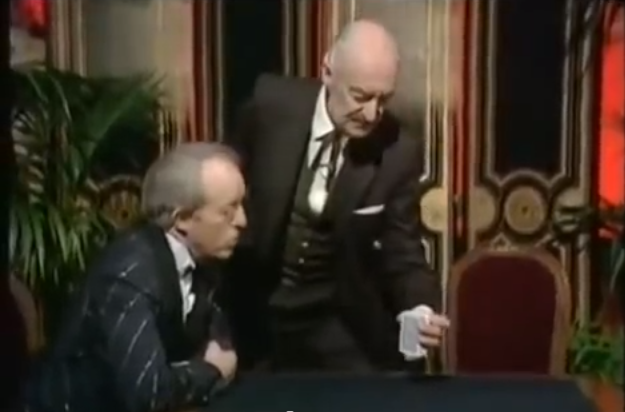
Having just spent two weeks in France, with the Paris terror attacks causing complete havoc, I thought to myself: it’s time for a little light entertainment (wait, isn’t all of this just a little light entertainment?), courtesy of the Michael Carbonaro hidden camera TV magic show.
A great update of the in-famous rabbit from a top hat magic routine.
Enjoy the video.
VG


0 Comments

Tribute, or cover?

7/10/2015

 
Picture


I’m starting research and rehearsals on a new trick. But first a little prologue.
 
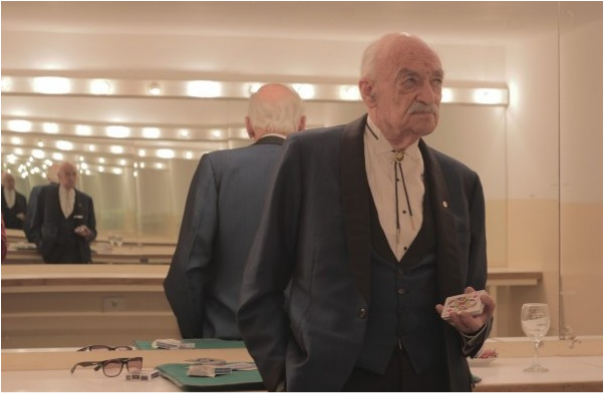
I recently found out that one of the greats of close-up magic, the Argentinean René Lavand, passed away earlier in 2015. I was shocked and very much saddened.
Lavand was many magicians’ favourite magician. Mention his name to most prestidigitators, and you will see eyes light up and chests heaving with heartfelt admiration: as far as performers go, Lavand was perhaps the best magician of the 20th century.
To my mind, his work is a kind of performance poetry with objects. What strikes me, again and again, are the particular rhythms that he would set in motion, rhythms that have a lot to do with the relation between speech and actions, and a canny use of repetition. His pieces worked like incantations, often driving simple ideas through sophisticated rhetorical and gestural motifs.

The trick in question was Lavand’s signature piece. Entitled ‘No se puede hacer mas lento’ (It can’t be done any slower), it is his equivalent of, let’s say, Michael Jackson’s Billy Jean, or Keith Jarrett’s The Koln Concert. Arguably his best known work, and probably for good reason.
So the question for me now is: why on earth would I, or anyone else, try to reproduce this trick? Surely I cannot match the ‘original’, and so why perform a ‘copy’?
 
I am thinking along the lines of a cover, to use a musical term. I’d like to do a cover version of Lavand’s signature card trick, in which 3 red cards and 3 black cards are slowly positioned in alternate order (black, red, black, red, black, red), only to be turned over to reveal that the colours are unmixed. This is done a total of 5 times, each time the trick growing more impossible, and each revelation accompanied by Lavand’s famous exhortation: ‘No se puede hacer mas lento!’ (It can’t be done any slower).

Some questions I am considering are: what needs to be kept to constitute a cover, and what can be, or needs to be, modified?
I already adapted one of Lavand’s tricks, effectively making a new trick out of it (his ‘El Griego’ formed the basis of my ‘Neuromagic’, in which four cards turn white on both sides).
However for this trick I think it’s crucial that the handling and execution mirror Lavand’s. And since he famously only had the use of his left hand, having lost his right hand in a childhood car accident, this means learning to perform the trick one handed (I’ve been practicing daily for the past month, spurred by a minor case of Repetitive Strain Injury on my right forearm).
 
I don’t want to do the trick “as Lavand”, or even imitate his manner of speech. It would jar to have Gambini – a kind of tongue in cheek ironic magician – suddenly launch into Lavand’s poetic oration, which features solemnly delivered lines such as “There is nothing more nebulous than the truth…” I could never deliver this line with a straight face. So how to re-present this piece, without making a mockery of the original, or forgoing my own stylistic preferences?
 
Here’s the snag about this whole pursuit: there is something about the straightforward tribute that never works well for me in a live performance. Just like a small town tribute act (no offense to small town tribute acts), whenever a performer does a tribute they end up undermining both themselves and the original. Perhaps the tribute is a rather dubious creative pursuit: it leaves the performer “hiding” somewhat behind the imitation, and it potentially cheapens the original precisely by trying to recreate it.
 
A cover, however, is very different from a tribute: the cover typically takes an existing piece, and adapts it, responds to it, enters into dialogue with it, perhaps kicks it around a little, or reframes it, and turns it to other uses. I think of PJ Harvey’s fantastically skewed rendition of Bob Dylan’s Highway 61 Revisited. https://www.youtube.com/watch?v=D3CIK5SoTio If you can’t improve on a song that is superb, and superbly well known, you might as well take it out to graze in unknown pastures.
Whereas a tribute implies narrow subservience – a little like prostrating at the feet of a beloved but inescapable father figure – the cover allows more room for encounter, manoeuvre, and transformation.
 
I don’t know how Lavand’s piece will mutate, if at all. I know there won’t be a framed photograph of him in the show, no speeches about what a great magician he was.
Perhaps the tribute lies precisely in carrying his piece forward, and transmuting it into a new shape, yet retaining some essential feature of the original.
 
A long blog entry, but do stay tuned, and if you wish to see the “original”, here’s a link to Lavand performing it on an early Paul Daniels show (time signature 3:53 - 7:43) https://www.youtube.com/watch?v=k1ERjYyKvVU
 
Now be well
VG

Post Edinburgh 

3/9/2015

 
It might seem a little, ehm, self-indeulgent to write this, but here goes. There's a definite bluesy period that follows from any high, and such is the mood upon returning home from performing "This is not a magic show' at Edinburgh's superb Forest Fringe.
It was brilliant to be able to perform the piece, in a proper theatrical setting, 5 days in a row. Not all works of performance improve through repeated showings, but magic certainly can: the piece is now 1 hour long, has a new ending I'm very proud of, and I'm starting to get a sense of the throughline that connects it all up (well, almost all of it).
Mostly, it was encouraging to see that a work of close-up magic can stand its ground in a context of contemporary theatre: the piece received 4 star reviews in The Guardian, Time Out, The Stage, and Fest Mag! (no doubt I'll soon by plastering the website with excerpts, so I'll save the quotes for that).

So, what to do after a great run of shows? Watch a comedy series.

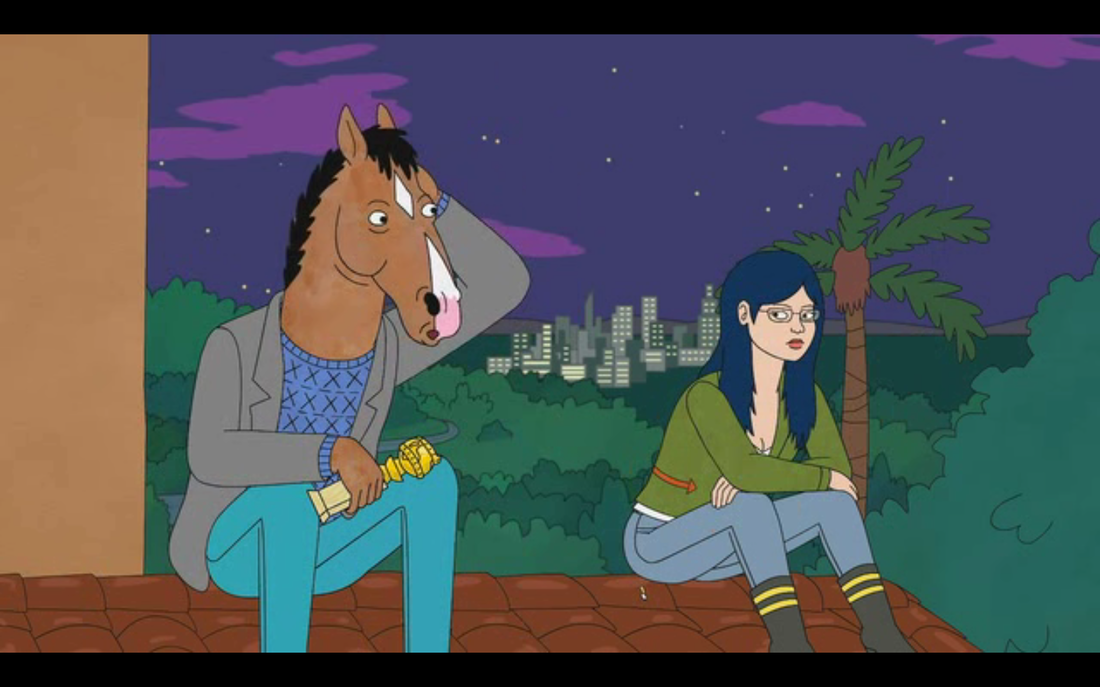
Last night I saw the season finale to the excellent animated series Bojack Horseman, and couldn't help make parallels. Bojack, washed-up Hollywood actor from a 90's sitcom, returns in the public eye after publishing a biography and winning an award for it. Wherever he goes, he walks around clutching the award in his hand, which is funny and heatbreaking. In the final dialogue, he sits on the roof to his house, talking disconsolately to Dianne, his friend and biographer. Bojack asks Dianne:

- What do I do now?
- Well, that's the problem with life, right? You either know what you want, and then you don't get what you want. Or you get what you want, and then you don't know what you want.
- Well that's stupid
- Yeah.


Picture

Copperfield's pearl of wisdom

31/7/2015

 
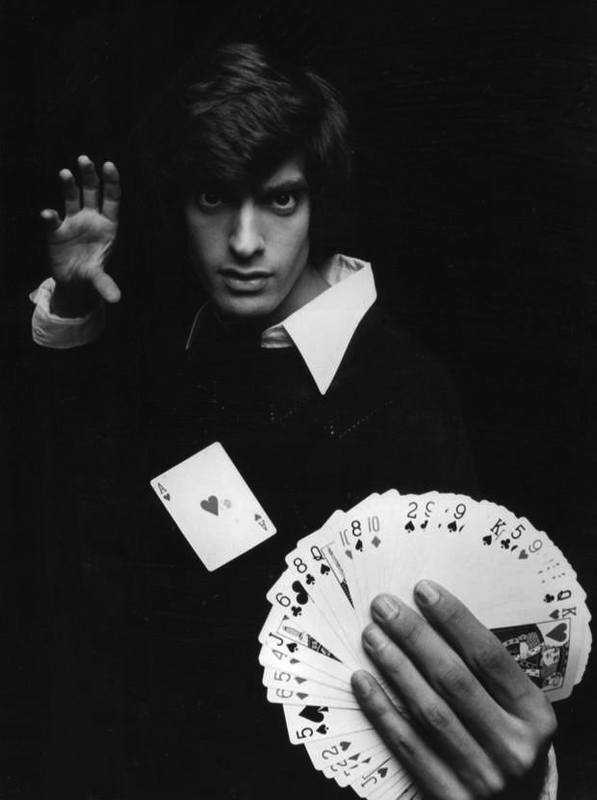
'Resolution - the tidy ending - is the tradition in magic.... Someone disappears, he reappears. The ambiguity in contemporary film and literature has been missing from magic. It's time for magic's postmodern moment.'
David Copperfield, 2000

Though I wouldn't call his work  'post-modern' (far too indebted to West End musicals, to Disney, to clear victorious narratives and resolutions), Copperfield's comment hits home with me. It's time for magic's postmodern moment. Other than Penn and Teller, where are those postmodern magicians?

And of course: there's nothing wrong with appearance and disappearance. Case in point: Copperfield's 'After hours' remains one of my favourite magic videos. A person appears...some dancing... the person disappears.

See here:
http://www.metacafe.com/watch/467845/david_copperfield_after_hours/

Yours
VG


"David Copperfield Magician Television Special 1977" by ABC Television
Picture

Going to Edinburgh? Need performance magic?

26/7/2015

 
Dearest folk,
if you're going to Edinburgh for the great bonanza that is THE festival (not true, there are several festivals all nested into one another), then please allow me to surreptitiously force this choice on you:

Vincent Gambini's This is not a magic show
At Forest Fringe, Mon 17th - Fri 21st, at 12pm.
To book your FREE ticket, go to:
http://www.brownpapertickets.com/event/1996167

This is still at a work in progress stage, but all that means is that the piece is alive with the tension of me still figuring it out, as opposed to it being a repeatable self-same drudgery of a finished show (not true, finished shows don't have to be dead things, it's just convention that makes them so).

Yes, so, come.
Forest Fringe have put together a superb line-up, including Forced Entertainment, and Vincent Gambini.
All details here:
http://forestfringe.co.uk/edinburgh2015/artists/

ta-dha!
Vincent

Oh no...

10/6/2015

 
Picture
Oh no, not a blog entry that starts with "It's been a while since I've written a blog entry".
Yes I'm afraid.
For it has been a while... It's been a while since I've written a blog entry.
However t'will be short and sweet, merely some dates to see yours truly perform sleight-of-hand magic:

- Friday 12th June, at Dice Festival in Haggerston, London
Details here: http://dicefestival.wix.com/dicefestival#!blank/cwlm

- Monday 15th June, at Pages of Hackney, London (BOOKED OUT)

- (tbc) Thursday 9th July, Steakhouse Live at Arts Admin, Toynbee Studios, London
Details here http://www.steakhouselive.com/

- (tbc) Thursday 16th July, Steakhouse Live at Latitude Festival
Details here http://www.latitudefestival.com/

- And finally the big one, 7 days in a row that I'm truly looking forward to:
17-23 August, at Forest Fringe, Edinburgh
Early details here: http://www.forestfringe.co.uk/2015/04/here-we-go-again/

Might be good to end on a photo
(looks like a pre-kid's show. It isn't. Taken by Sylvia Saunders at a farewell house party in Falmer)


It can't be done any slower: on Slow Magic

16/2/2015

 
PictureStill from the film El Gran Simulador (2013)
(The following essay was originally published to accompany the show at Rhubaba Gallery, Edinburgh Art Festival, August 2014.)


Magic is fast.

When we think of a magician, particularly a sleight of hand magician, we think in terms of speed: the speed of execution, of concealment, of the swindle.
In a magic show things happen quickly and out of sight, the magician talking at a hurried pace, distracting the audience, and making that speed his subject material, for example through patter lines such as “the hand is quicker than the eye”, “now you see it now you don’t”, “hey presto”.
In music notation, the word presto denotes a quick tempo. The word ‘presti-digitation’ literally means “quick fingers”.
We could think of the quick tempo of magic as being analogue to that of the entertainment industries, of bite-sized attention spans, and the hurried production and consumption of images in what theorist Jonathan Crary has called terminal capitalism.
How to find another pace, another rhythm?

When a sequence of film or video images is slowed down, it becomes possible to see not only more, but differently. What was previously invisible gradually becomes visible; in the right conditions, we realise it is not just the images that have been slowed down, but ourselves too.

There is, or there might be, an alternative current of magic, never formalised as such, which we might describe as slow magic.
The initiator of slow magic would be the Argentinean René Lavand, who is widely regarded by magicians worldwide as one of the best practitioners of sleight of hand card magic. Lavand, who as a child lost his right hand in a car accident, performs masterful card sequences with his left hand only, whilst narrating carefully crafted stories, poems and anecdotes about life and art. Sat behind a table, he moves gracefully, with a deliberately slackened motion, occasionally pinpointed by small dramatic bursts.

The fact that he performs magic tricks with one hand of course raises the stakes, but what is truly remarkable is that he doesn’t attempt to “normalise” his performance, for example by showing that he can do with one hand what other magicians need two hands to accomplish. Lavand wears his wound visibly, his right arm at his side, hand tucked in his trouser pocket. Instead of trying to compete with the speed and skill set of two-handed magicians, he has chosen to sculpt a different approach altogether: that is, to go slower.
It is Lavand who, in one of his most celebrated pieces, makes up the term “lentidigitation’” (literally, “slow fingers”). The sequence involves him slowly and visibly mixing red and black cards, then showing how, like oil and water, they have inexplicably separated. He repeats this a number of times. The sense of wonder grows steadily: each time he repeats the sequence, he moves slower, more clearly, as if to show how the trick is done and how simple it is. And each time he spreads the cards and reveals that the colours have, once again, inexplicably separated, he declares, as if in a refrain:

No se puede hacer mas lento

(It can’t be done any slower)

Taking a cue from Lavand, then, slow magic is the kind of magic that emphasises slower rhythms, that is not in a hurry, or that even appears to disclose its own processes (but never its actual working methods: that is the one conservative limit of this performing art). Slow magic’s exhortation to audience members is: “LOOK AT THIS”. Spectators become detectives, forensic specialists, patient visitors at an art gallery.

I wonder, more generally, about the possible relations between slowness and enchantment, between doing things at a reduced tempo and a sense of marvel.
I think of the writer Nabokov as young boy in Russia, recounting the hours he spent watching the snow fall outside the window, waiting for his piano teacher to arrive (he was always late). He writes:

            There was nothing to watch save the dark, muffled street and its receding line of loftily suspended lamps, around which the snowflakes passed and repassed with a graceful, almost deliberately slackened motion, as if to show how the trick was done and how simple it was.

The motion of falling snow becomes an event in its own right, unfolding over and over again before the young Nabokov, ‘as if to show how the trick was done and how simple it was’.

No se puede hacer mas lento…

Slow magic might have to do with the micro performances of everyday things: of snow, of leaves, of plastic bags (as demonstrated, if overdone, in the film American Beauty). It is about the myriad manifestations of matter, of things becoming, transforming, passing: as if to show how the trick was done and how simple it was.


Magic at the Art Gallery

15/2/2015

 
Why aren't there more magicians performing in art galleries? More and more, live performance work (esp dance, at least in the UK) is happening within the gallery's white walls.
I'm reminded here of the exhibition Magic Show (2009), from London's Hayward Gallery, which was curated by artist (and magician) Jonathan Allen, and critic and writer Sally O'Reilly. It was great to see magic enter the gallery space, though as far as I know that show didn't feature live performance (perhaps at the opening event?)

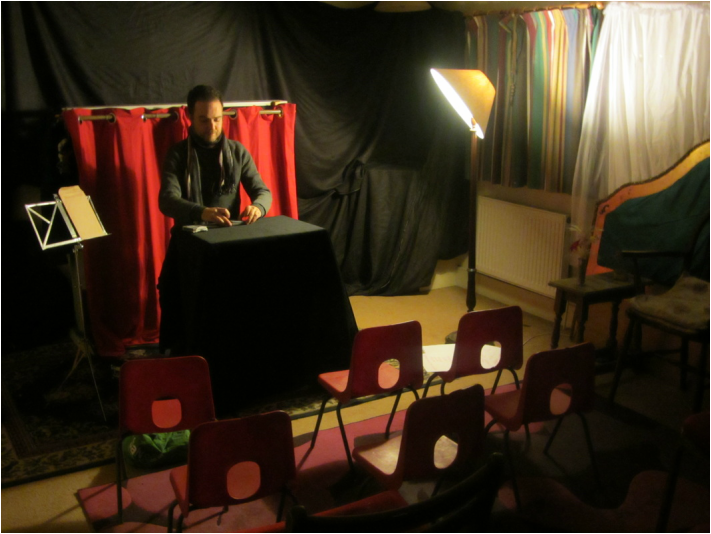
Leaving behind for now the question of where magic performances take place (and how those places might reconfigure magic as a performing art): below is a video recording of me performing at Rhubaba Gallery, to open the show for Edinburgh Art Festival 2014.

This trick with the 4 aces is one of my favourites, and here I was experimenting with a new presentation format, which I later abandoned due it being a little longwinded: even Frieze magazine, in their cooly detached blog review of the event, acknowledged it was "a complex card trick". But still it was great to perform magic at an art event: less chin scratching, more jaw dropping.
(I lie: the way I present magic lends itself quite nicely to chin scratching. I hope. In fact the ultimate aim would be a magic performance that induces chin scratching AND jaw dropping, simultaneously).

Yours truly,
V. Gambini

P.S. I should mention that the performance in the video is based on a version by the excellent Italian comedy magician Raul Cremona, who can be seen performing here (in Italian): https://www.youtube.com/watch?v=l5bBtM4o_iM

P.P.S. For info on the Hayward Magic Show, go to
http://tinyurl.com/kq6fjq6


A Conjuring Act in The Form of an Interview

15/2/2015


The wait is over... (uhm?)
The booklet A Conjuring Act in The Form of an Interview is now here... (what?)

Last August I was, for the first time, on a 'magic residency', courtesy of the great team that run Rhubaba Gallery & Studios in Edinburgh. They invited me, alongside performance artist Augusto Corrieri, to work there for a month during the Art Festival, August 2014. It was in that time that I developed the material for This is not a magic show.
As part of the gallery show we also produced a fantastic booklet (printed and bound in-house by Work Horse Press), featuring an interview between Augusto, myself, and the Rhubaba Gallery.


You can now download the booklet for free below. Or write to me for details on purchasing a splendidly produced paper copy, made on a riso printer that uses soy-based ink (or so I believe).

Yours,
V. Gambini


a_conjuring_act_in_the_form_of_an_interview.pdf
File Size: 2334 kb
File Type: pdf
Download File

Introducing... this!

23/1/2015

0 Comments

 
Well here it comes...
THIS!
(As in: this website, not this message).
I hope that www.vincentgambini.com can be a space both for showing off my wares to the world, as well as posting interesting links, videos and thoughts on magic and the performing arts.
To start off:

ALTERNATIVE MAGIC

Magic is no longer about long capes and bunny rabbits (I know, it's a shame), nor glamorous assistants being hacked to pieces. As an art form magic is evolving, it is shedding its tired stereotypes and acquiring a more contemporary flavour (or at least, I hope it is).
Yes magic is a form of spectacle, but entertainment doesn't have to be cheap or nasty: there are always alternatives.  Just think of how comedy has its "alternative comedy" scene. The same goes for theatre, dance, the visual arts, music. How about an "alternative magic" scene? Well, wand-waving comrades and spellbound audiences, it's time to forge into the unknown, and see just what forms alternative magic might take.


A piece of alternative magic that continues to inspire is Penn & Teller's version of the Cups and Balls, in which the duo purport to explain the trick by using see-through plastic cups. And yet, because of the speed and the amount of information they detonate on the audience, the explanation becomes merely another dazzlement, a deceptive act in its own right. They open one door to show that there's another door, then another, and so on.
A video link to their performance is here, enjoy!


0 Comments
Forward>>

    Archives

    October 2025
    May 2025
    September 2024
    August 2024
    June 2024
    March 2024
    July 2023
    September 2022
    February 2021
    December 2020
    August 2020
    April 2020
    November 2019
    October 2019
    August 2019
    June 2019
    May 2019
    February 2019
    January 2019
    December 2018
    November 2018
    July 2018
    April 2018
    March 2018
    January 2018
    December 2017
    November 2017
    September 2017
    July 2017
    June 2017
    May 2017
    April 2017
    March 2017
    February 2017
    January 2017
    October 2016
    September 2016
    August 2016
    July 2016
    June 2016
    May 2016
    April 2016
    March 2016
    February 2016
    January 2016
    December 2015
    November 2015
    October 2015
    September 2015
    July 2015
    June 2015
    February 2015
    January 2015

    Categories

    All

    RSS Feed